
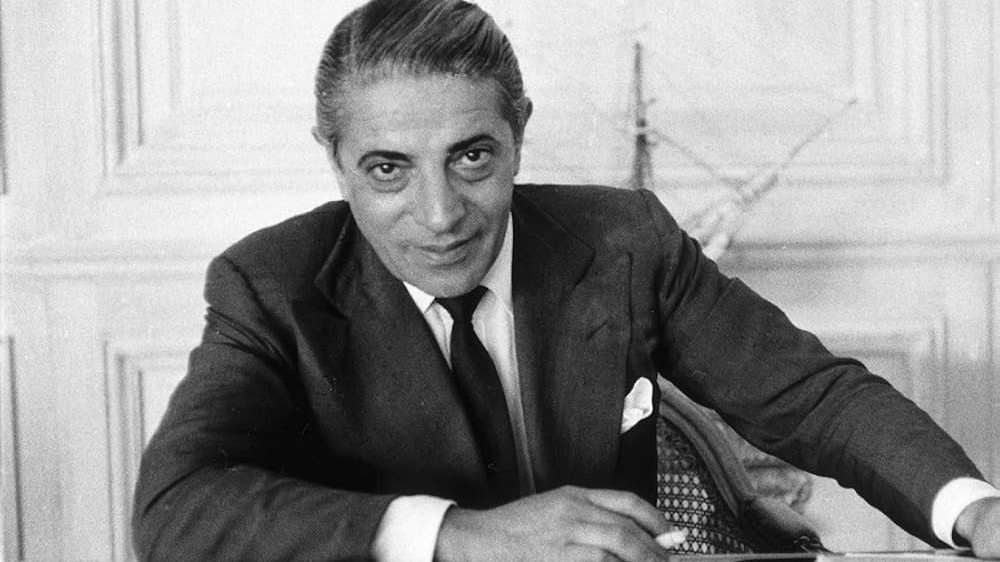
After a certain point, money is meaningless
Aristotle Onassis’ quote — “After a certain point, money is meaningless. It ceases to be the goal. The game is what counts.” — reflects a profound truth about human ambition, wealth, and fulfillment. Let’s break it down in detail:
1. The Limits of Money as a Goal
- At the beginning of one’s career, money is often a primary motivator. It represents survival, security, freedom, and status.
- However, once a person accumulates wealth beyond their needs (a state of financial abundance), money itself loses its intrinsic motivational power. It becomes less about “more” and more about what you do with it.
- For billionaires like Onassis, another million does not change their lifestyle — so the pursuit must shift to something deeper.
2. The Shift from Wealth to Challenge
- When money ceases to be a goal, the “game” of business itself becomes the reward.
- The “game” refers to:
- Outthinking competitors.
- Building empires and legacies.
- Creating something that lasts.
- The excitement of strategy, negotiation, and winning difficult battles.
- For Onassis, who rose from nothing to become one of the wealthiest men of his time, the thrill wasn’t in having wealth but in the art of acquiring it and wielding influence.
3. The Psychological Element
- Humans are wired for progress, mastery, and meaning rather than static accumulation.
- Once the basic and luxury needs are met, motivation transforms into:
- Onassis saw business as a high-stakes game where strategy mattered more than the chips on the table (money).
4. The Philosophy of Infinite Games
- This ties into James Carse’s concept of finite vs. infinite games:
- Finite games: Played to win (money, status, possessions).
- Infinite games: Played to keep playing (growth, challenge, legacy).
- Onassis’ perspective aligns with the infinite game mindset: once wealth is secured, the real victory is staying engaged, outsmarting others, and constantly raising the bar.
5. Application to Life and Legacy
- The quote also reflects a legacy-oriented mindset:
- Wealth alone is not enough; it must be used as a tool for influence, power, and impact.
- The “game” is not about hoarding but about shaping industries, building dynasties, and influencing society.
- This perspective is highly relevant to our family office philosophy, where the focus is not on short-term wealth but on seven-generation impact — the continuation of the “game” across time.
✅ In essence: Onassis teaches us that money, past a certain threshold, is no longer the true prize. What matters is the journey, the challenge, the mastery of the game itself, and ultimately, the legacy one leaves behind.
Aristotle Onassis and the Seven Generation Legacy Mindset
1. Money as a Threshold, Not a Destination
- In the first generation of wealth creation, money is the measure of survival, progress, and success.
- However, once a family achieves escape velocity (where capital generates more capital than consumption can deplete), money itself becomes a threshold marker.
- At this level, capital is no longer the goal — it is the instrument. The true wealth lies in how it is deployed to shape the future.
2. The “Game” in Family Office Terms
For Onassis, the “game” was the thrill of strategy, deal-making, and industry-shaping. In the family office context, the “game” becomes:
- Preserving dynastic wealth across 7+ generations.
- Outthinking systemic risks — inflation, taxation, regulation, political instability.
- Playing for impact, not for profit — where wealth is harnessed to transform industries, communities, and even civilizations.
- Designing ecosystems (philanthropy, business holdings, real estate, capital markets, partnerships) that reinforce one another for centuries.
Thus, the “game” is not just about winning today, but ensuring that your family name, values, and capital remain relevant 150 years from now.
3. Psychology of Generational Wealth
- For the wealth creator, money represented validation.
- For the heirs, money without meaning becomes a burden, not a blessing.
- By reframing wealth as a “game of stewardship,” our family office trains heirs to see money as responsibility, not entitlement.
- This mindset fosters mental capital, intellectual capital, and spiritual capital, which ultimately become more enduring than financial capital.
4. The Infinite Game of Legacy
Onassis’ “game” aligns directly with the infinite game philosophy that drives our Seven Generation Legacy Process:
- Finite players seek to win (maximize profits, beat competitors).
- Infinite players seek to continue the play (sustain the family enterprise, grow impact, transfer values).
- Ultra-high-net-worth families must become infinite players — the true victory is that the game of legacy continues, generation after generation.
5. Strategic Implications for Medici Family Office
Onassis’ philosophy teaches families that:
- Capital without purpose breeds entropy. After a certain point, the pursuit of “more” becomes meaningless.
- Legacy is the ultimate game. Families must channel resources into Impactful, Sustainable, Significant Legacy Projects that transcend individual lifespans.
- Seven Generation Stewardship is the ultimate challenge: building structures, agreements, governance, and philosophies that will outlast the original wealth creator.
- Just as Onassis turned business into an art form, families must turn legacy-building into their highest game.
✅ Onassis’ words are not just about billionaires chasing thrill over money. They are a blueprint for dynasties: once money ceases to be the motivator, families must embrace the game of legacy — where wealth becomes a tool, the family becomes the player, and time itself is the arena.