Home » Posts tagged 'Brain'

Tag Archives: Brain

Building and Interacting with Virtual Brain


Building and Interacting with Virtual Brain

The Virtual Brain (TVB, thevirtualbrain.org) is an international project that uses real neuroimaging data to construct a simulation of the human brain. Anatomical data setup the conduit for communication between different brain regions. The dynamics for each region are generated from a library of nonlinear models, and produce large-scale activity patterns that can be compared directly to empirical functional data, such EEG/MEG or functional MRI. The talk will present the core of the platform and its applications to understanding the structure-function interplay that forms the basis of cognitive architectures. TVB’s use of real data is also at the heart of a larger social neuroscience initiative, wherein small groups of people interact with TVB through wireless EEG headsets, modifying an immersive audiovisual environment that mimics a dream — My Virtual Dream. The goal is to make use of individual brain signals to augment the group experience through TVB. The two avenues of development for TVB will inform neurally-inspired computing architectures and the evolution of interactive devices that can use a person’s physiology to redesign their experience.

Speaker Info:

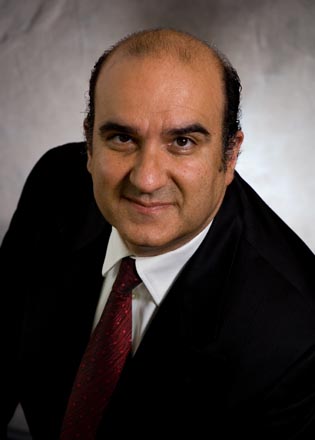
Randy McIntosh, PhD.
Professor, Department of Psychology, University of Toronto
Director, Rotman Research Institute, Baycrest Centre


David Anderson: Your brain is more than a bag of chemicals


David Anderson: Your brain is more than a bag of chemicals

Modern psychiatric drugs treat the chemistry of the whole brain, but neurobiologist David Anderson believes in a more nuanced view of how the brain functions. He illuminates new research that could lead to targeted psychiatric medications — that work better and avoid side effects. How’s he doing it? For a start, by making a bunch of fruit flies angry. (Filmed at TEDxCaltech.)

Through his lab at the California Institute of Technology, David Anderson seeks to find the neural underpinnings of emotions like fear, anxiety and anger.

WHY YOU SHOULD LISTEN TO HIM?

How is emotional behavior encoded in the brain? And what parts of the brain are affected by depression, ADHD and anxiety? This is what neurobiologist David Anderson researches in his lab at the California Institute for Technology by studying the brains of lab mice and fruit flies. By looking at how neural circuits give rise to emotions, Anderson hopes to advance a more nuanced view of psychiatric disorders — that they aren’t the result of a simple “chemical imbalance,” but of a chemical imbalance at a specific site that has a specific emotional consequences. By researching these cause-and-effect relationships, Anderson hopes to pave the way for the development of new treatments for psychiatric disorders that are far more targeted and have far fewer side effects.

Trained by two Nobel laureates, Gunter Blobel and Richard Axel, Anderson is also an investigator at the Howard Hughes Medical Institute.

“You are at a picnic and a wasp is circling. You swat it away, but it buzzes back again and again, more persistent each time. The wasp seems angry. Or is it? Can insects be ‘angry’? David J. Anderson believes that what we perceive as insect anger may share a foundation with human frustration or aggression. “ Proceedings of the National Academy of Sciences


Dr. David Rock on Science Behind Leadership


Dr. David Rock on Science Behind Leadership

It’s all in the brain. Dr. David Rock from NeuroLeadership Institute talks about why it’s important to understand how we think to improve our working culture.


Google Personal Growth Series: Mindsight: The New Science of Personal Transformation


Google Personal Growth Series: Mindsight: The New Science of Personal Transformation

This interactive talk will examine two major questions: What is the mind? and How can we create a healthy mind? We’ll examine the interactions among the mind, the brain, and human relationships and explore ways to create a healthy mind, an integrated brain, and mindful, empathic relationships. Here is one surprising finding: the vast majority (about 95%) of mental health practitioners around the globe, and even many scientists and philosophers focusing on the mind, do not have a definition of what the mind is! In this talk, well offer a working definition of the mind and practical implications for how to perceive and strengthen the mind itself—a learnable skill called mindsight. Then well build on this perspective to explore ways that the mind, the brain, and our relationships are influenced by digital information flow and also how they can be moved toward healthy functioning.

Presented by Daniel J. Siegel, M.D.


You have a brain in your head, feet in your shoes, steer yourself in any direction you choose – Dr. Seuss


You have a brain in your head, feet in your shoes, steer yourself in any direction you choose – Dr. Seuss

28752_455638717831270_1459037007_n


How Does the Brain Work?


How Does the Brain Work?

This episode of NOVA scienceNOW delves into some pretty heady stuff, examining magic and the brain, artificial intelligence, magnetic mind control, and the work of neuroscientist and synesthesia researcher David Eagleman. Can we really believe our own eyes? Will machines one day think like us? Can magnetic wands effectively control brain functions and treat depression? Explore this and more.


Professor Steven Rose ‘Can Neuroscience Explain the Mind’


Professor Steven Rose ‘Can Neuroscience Explain the Mind’

How close are we to solving the mystery of consciousness? How effective and appropriate are treatments for depression and Alzheimer’s Disease? Is Attention Deficit Hyperactivity Disorder (ADHD) in fact the symptom of a social, rather than brain, disorder? What can brain imaging techniques reveal about us? For most of us, the mind is a safe and private refuge; will it remain so?

Extraordinary new windows into brain function are now being opened, and this lecture Steven Rose discusses the ethics and the implications of these neurotechnologies.

Steven Rose is a professor of Neurobiology at The Open University and the University of London. This talk was given as part of the 2007 Unesco NZ Science Lectures, on Thursday 8 March, Auckland War Memorial Museum, Auckland, New Zealand.

He is also a successful author. Some of his books include ‘Not in Our Genes‘ and ‘Alas Poor Darwin’

His latest book “Genes, Cells and Brains: The Promethean Promises of the New Biology”


Are the Brains of Musicians Physically Different?


Are the Brains of Musicians Physically Different?

Charles Limb, MD discusses the functional and morphological differences between the brains of musicians and non-musicians.

An excerpt from “Music & the Mind: The Magical Power of Sound ” featuring Steve Paulson, Jamshed Bharucha, Concetta Tomaino, Charles Limb, and Vijay Iyer.

The New York Academy of Sciences
Wednesday, December 12, 2012


Nutrients for Better Mental Performance


Nutrients for Better Mental Performance

Presented by Steven Wm. Fowkes.

The talk will answer questions like:

1. Which nutrients promote optimal brain function?
2. What nutrients are commonly deficient enough to impair mental performance?
3. How can you get a better nights sleep without Ambien?
4. What nutrients counteract aspects of aging?
5. Is there an alternative to serotonin reuptake inhibitor (SRI) antidepressants?
6. What modern nutrition myths lead us to consume products that sabotage healthy brain function?
7. What tests can you get from your doctor?
8. What nutrients affect appetite, alertness, and tension?
9. What nutrient combo will prevent hangovers 90% of the time?

About Steven Wm. Fowkes
Steven Wm. Fowkes is the Director of the Cognitive Enhancement Research Institute and a co-author of the book Smart Drugs II.
He has appeared on Larry King Live and in two anti-aging documentaries. Steve will explain how different nutritions can help people of all ages treat various physical and mental conditions, spanning from genetic disorders such as Down syndrome, to adolescent behavior problems and on to senility and Alzheimer’s disease in the elderly. He will also speak about using nutrients to address memory problems as well as verbal and multi-tasking challenges that the testosterone-poised homo sapiens (i.e., men) are commonly known for. In the Q&A feel free to ask him how to use nutrients to improve ones sense of humor.

Follow

Get every new post delivered to your Inbox.

Join 4,433 other followers

%d bloggers like this: