Home » Posts tagged 'BBC'
Tag Archives: BBC
Lessons from the Top with BBC’s Gavin Esler
Gavin Esler has been interviewing leading figures from politics, sports, industry and the arts for more than thirty years – from Bill Clinton and Alistair Campbell to Lady Gaga and Angelina Jolie. In this talk, he draws upon his experience at the BBC to examine how leaders in all fields — from politics to media, from business to the arts — all have to master a crucial skill: that of storytelling. About themselves, their origins, their beliefs — and where they and their audience are headed.
Based on insights from his book, ‘Lessons from the Top: The 50 Most Successful Business Leaders in America – and What You Can Learn From Them”:
Great leaders have always understood the power of stories. Through the stories they tell, the most successful leaders educate, persuade and bring about change, but we rarely have the background knowledge to explore how they do so. In this hugely insightful guide to getting to the top, leading journalist Gavin Esler presents first-hand knowledge of the secrets of those who achieve power based on over thirty years’ experience interviewing world famous figures from Bill Clinton to Angelina Jolie. Introducing the questions every leader must answer – and the elements that the best stories must contain – Esler explains how creating a leadership story can promote success at all levels, whether running for the United States presidency, or applying for a place at university. While many essentials of storytelling have stood the test of time, he examines the opportunities and pressures created by twenty-first century phenomena such as 24 hour news, and what they tell us about how to reach the top – and how to judge those already there. Spanning fields from business and culture to the military and even taking in lessons from terrorism, Lessons from the Top offers a fascinating portrait of leadership in the modern world – and shows how the methods of the most powerful leaders could work for you.
Russian Godfathers – The Fugitive
An elite group of entrepreneurs amassed vast wealth, huge influence and bitter enemies in the fall of the Soviet Union. Andrew Mueller examines the gilded misery of the oligarchs.
Russian politics,” declares Boris Berezovsky, “is Russian roulette.” So, he might have added, is Russian business – although, given the considerable overlap between Russian politics and Russian business, he probably thought it unnecessary. Berezovsky, the archetype of the post-communist breed of Russian businessmen known – both admiringly and derisively – as the oligarchs, has survived several assassination attempts, including a 1994 car bomb which decapitated his driver.
Berezovsky makes this splendidly melodramatic declaration at the beginning of episode one of Russian Godfathers, an excellent new BBC series by Patrick Forbes, director of the acclaimed The National Trust. Russian Godfathers examines how, in the chaos that followed the collapse of the Soviet Union, the state-owned assets and resources of the superpower were snapped up by a tiny group of smart, ruthless, ambitious and well-connected men, who abruptly joined the ranks of the very richest people in history.
Russian Godfathers also examines their very mixed fortunes since coming into their preposterous wealth, which is a bold enterprise in itself. The rise of the oligarchs was one of many grotesque results of Russia’s transformation to capitalism – a shift managed so ineptly that many Russians ended up nostalgic for communism. The oligarchs, idiotically rich in a country that was largely poor, and given to parading their wealth in a manner that makes American hip-hoppers look like an especially reticent community of Amish farmers, could certainly have given any former Soviet citizen pause to wonder, as he queued for beetroot, what the proletarian revolution had been for.
The oligarchs, not content with buying companies, villas, yachts, planes and the most beautiful of Russia’s beautiful women, also bought power. In 1996, they connived to engineer the re-election of the politically and physically ailing Boris Yeltsin. In 2000, they helped steer Yeltsin’s successor into power – Vladimir Putin, a saturnine former spook with the KGB, and its descendant organisation, the FSB. This, as Russian Godfathers demonstrates, may have been the moment at which the oligarchs out-clevered themselves.
Putin, able to see matters rather straighter than Yeltsin, realised two crucial things about the oligarchs: that they were potentially more powerful than him, and that they were about as popular with your average Russian as a man idly burning bundles of £50s outside an orphanage (according to one 2004 poll, only 18% of Russians opposed wholesale renationalisation of the country’s resources). In a country in which anti-semitism never quite went out of fashion, the fact that many of the oligarchs are Jewish makes them an even more tempting target for a populist like Putin (after the arrest of arch-oligarch Mikhail Khodorkovsky, Putin’s already high approval rating was measured at 80%).
BBC Explorations Billionaire Boys Toys
Part 1
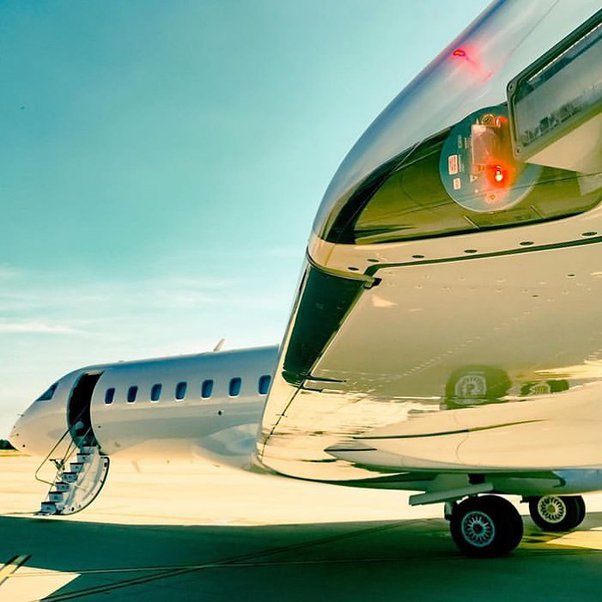
What would you buy if you were a billionaire, well have a look at what some billionaires boys toys.
Part 2
Part 3
3D Printed Fasteners That You Can’t Pull Apart! | Euromold 2012
These incredible 3D printed fasteners are the brainchild of an innovative company called Rotite which produces high strength connectivity devices for fasteners and connectors. The company’s devices were developed and tested using Objet 3D printing systems, including Objet’s ABS-like Digital Material.
China’s richest man Zong Qing Hou: Wealth gap is huge problem
China‘s richest man Zong Qing Hou: Wealth gap is huge problem
China has seen a remarkable economic transformation over the last 30 years, with hundreds of millions of people lifted out of poverty. But with the global economic slowdown, there are real fears that this miracle may not last.
China’s richest man, Zong Qing Hou, who grew up in poverty and now sits on a fortune of up to $20bn, told the BBC’s George Alagiah that the gap between rich and poor had become a “huge problem” and was something that would have to be tackled by the country’s new leader.