Home » Posts tagged 'Neuroscience'

Tag Archives: Neuroscience

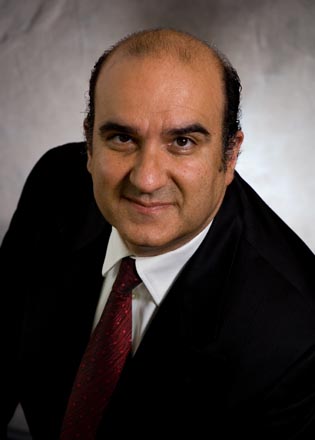
Colin Camerer: Neuroscience, game theory, monkeys


Colin Camerer: Neuroscience, game theory, monkeys

When two people are trying to make a deal — whether they’re competing or cooperating — what’s really going on inside their brains? Behavioral economist Colin Camerer shows research that reveals just how little we’re able to predict what others are thinking. And he presents an unexpected study that shows chimpanzees might just be better at it than we are. 

Colin Camerer is a leading behavioral economist who studies the psychological and neural bases of choice and strategic decision-making.

WHY YOU SHOULD LISTEN TO HIM?

Colin Camerer focuses on brain behavior during decision making, strategizing and market trading. He is the Robert Kirby Professor of Behavioral Finance and Economics at the California Institute of Technology. A child prodigy in his youth, Camerer received a B.A. in quantitative studies from Johns Hopkins when he was just 17 and a PhD in decision theory from the University of Chicago Graduate School of Business when he was 22. Camerer’s research departs from previous theory in that it does not assume the mind to be a rational and perfect system, but rather focuses on the limitations of everyday people when they play actual games, and seeks to predict how they will behave in situations that involve strategy. His studies focus on neurological findings from economic experiments in the lab (on humans — and monkeys!) Camerer is the author of Behavioral Game Theory.


Dr. Ron Stotts: The Creativity Crisis


Dr. Ron Stotts: The Creativity Crisis

The greatest minds throughout history agree that everything we create begins with imagination. We are currently in crisis — financial, environmental, health, relational, and spiritual — which indicates just how disconnected we have become from our inspired imagination.

What keeps us shut off from our innate creative abilities? Is there a way to bypass the gatekeepers of our brain? Dr. Ron Stotts will present you with the keys to unlock those gates and access your creative genius.

Professor Steven Rose ‘Can Neuroscience Explain the Mind’


Professor Steven Rose ‘Can Neuroscience Explain the Mind’

How close are we to solving the mystery of consciousness? How effective and appropriate are treatments for depression and Alzheimer’s Disease? Is Attention Deficit Hyperactivity Disorder (ADHD) in fact the symptom of a social, rather than brain, disorder? What can brain imaging techniques reveal about us? For most of us, the mind is a safe and private refuge; will it remain so?

Extraordinary new windows into brain function are now being opened, and this lecture Steven Rose discusses the ethics and the implications of these neurotechnologies.

Steven Rose is a professor of Neurobiology at The Open University and the University of London. This talk was given as part of the 2007 Unesco NZ Science Lectures, on Thursday 8 March, Auckland War Memorial Museum, Auckland, New Zealand.

He is also a successful author. Some of his books include ‘Not in Our Genes‘ and ‘Alas Poor Darwin’

His latest book “Genes, Cells and Brains: The Promethean Promises of the New Biology”


Are the Brains of Musicians Physically Different?


Are the Brains of Musicians Physically Different?

Charles Limb, MD discusses the functional and morphological differences between the brains of musicians and non-musicians.

An excerpt from “Music & the Mind: The Magical Power of Sound ” featuring Steve Paulson, Jamshed Bharucha, Concetta Tomaino, Charles Limb, and Vijay Iyer.

The New York Academy of Sciences
Wednesday, December 12, 2012


Molly Crockett: Beware neuro-bunk


Molly Crockett: Beware neuro-bunk

Brains are ubiquitous in modern marketing: Headlines proclaim cheese sandwiches help with decision-making, while a “neuro” drink claims to reduce stress. There’s just one problem, says neuroscientist Molly Crockett: The benefits of these “neuro-enhancements” are not proven scientifically. In this to-the-point talk, Crockett explains the limits of interpreting neuroscientific data, and why we should all be aware of them.

Neuroscientist Molly Crockett studies altruism, morality and value-based decision-making in humans.

WHY YOU SHOULD LISTEN TO HER

Can what you eat influence your sense of justice? Will a simple drug make you more likely to help a stranger on the street? Neuroscientist Molly Crockett asks and answers these and many other fascinating questions about the influence of neurotransmitters, like dopamine and serotonin, on altruism and decision-making. Neuroscience may hold the answer, says Crockett, but there are still limits to our ability to draw conclusions from neural research. Crockett received her PhD from the University of Cambridge in 2011, and she is currently working with support from the four-year Sir Henry Wellcome Postdoctoral Fellowship studying human altruism in labratories worldwide.


Faculty Forum on Interdisciplinary Neuroscience


Faculty Forum on Interdisciplinary Neuroscience

Columbia University President Lee C. Bollinger announced Dec. 17 that Mortimer B. Zuckerman has pledged $200 million to endow a Mind Brain Behavior Institute to support interdisciplinary neuroscience research and discovery by scholars across the University. Later that morning, Zuckerman and Bollinger attended a university forum featuring the Institute?s founding co-directors, Thomas Jessell and Nobel laureates Richard Axel and Eric Kandel, to discuss plans for the Institute. They were joined at the announcement by New York Mayor Michael Bloomberg.


Your Brain at Work


Your Brain at Work

Contemplative Neuroscience and Games, Learning and Society


Contemplative Neuroscience and Games, Learning and Society


Cognitive Neuroscience and Reading


Cognitive Neuroscience and Reading


Follow

Get every new post delivered to your Inbox.

Join 4,434 other followers

%d bloggers like this: