Home » Posts tagged 'Math'
Tag Archives: Math
Crack The Codes to Go From Dabbling to Dazzling in Business
Jim Ruta reveals the secrets to ultimate success in these two video clips from the Main Platform at the 2007 Million Dollar Round Table Annual Meeting.
The Golden Ratio and Fibonacci Numbers: Fact versus Fiction
(October 8, 2012) Professor Keith Devlin dives into the topics of the golden ratio and fibonacci numbers.
Arthur Benjamin: Teach statistics before calculus!
Someone always asks the math teacher, “Am I going to use calculus in real life?” And for most of us, says Arthur Benjamin, the answer is no. He offers a bold proposal on how to make math education relevant in the digital age.
Mathematician and magician Arthur Benjamin combines his two passions in “Mathemagics,” a mind-boggling presentation of lightning calculations and other feats of mathematical agility.
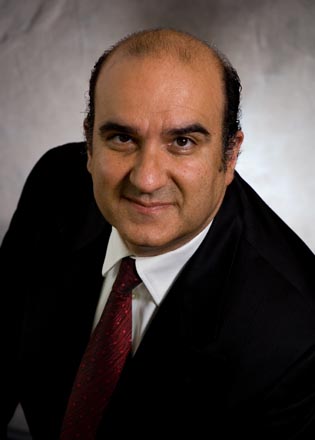
Arthur Benjamin makes numbers dance. In his day job, he’s a professor of math at Harvey Mudd College; in his other day job, he’s a “Mathemagician,” taking the stage in his tuxedo to perform high-speed mental calculations, memorizations and other astounding math stunts. It’s part of his drive to teach math and mental agility in interesting ways, following in the footsteps of such heroes as Martin Gardner.
Benjamin is the co-author, with Michael Shermer, of Secrets of Mental Math (which shares his secrets for rapid mental calculation), as well as the co-author of the MAA award-winning Proofs That Really Count: The Art of Combinatorial Proof. For a glimpse of his broad approach to math, see the list of research talks on his website, which seesaws between high-level math (such as his “Vandermonde‘s Determinant and Fibonacci SAWs,” presented at MIT in 2004) and engaging math talks for the rest of us (“An Amazing Mathematical Card Trick”).
“After his lively shows, students often rush the stage, eager for more tips and tricks.” Reader’s Digest
Closing the Gap Between Where You Are and Where You Want To Be
In the majority of projects that I work on, whether they be for businesses or helping families live their dreams, the two biggest challenges that I normally encounter are 1) lack of clarity of what is really wanted; and 2) not understanding that structural dynamics need to be addressed to actually accomplish the new vision.
In regard to lack of clarity, if you do not know what you want, there are millions of ideas constantly bombarding you each day from other people that will continually take you off track from living your dreams. Unfortunately, I find this is true whether you are rich or poor. Therefore, if Clarity is an issue, you must first focus on your own inward journey of self-discovery before embarking on your outward journey of manifesting your desired results.
In regard to structural dynamics, imagine that you are a farmer with a river flowing through your land. Although you can use the water from the river to nourish your crops, the riverbed is fixed on how the river flows through your land. Problem solving only helps with strategies of pulling water from the river but does nothing to resolve the fundamental structure of the existing riverbed.
In his book, The Path of Least Resistance, Robert Fritz explains problem solving this way:
“At best, problem solving can bring temporary relief from a specific situation, but it seldom leads to final success….The path of least resistance in problem solving is to move from worse to better and then from better to worse again. This is because the actions taken are generated by the problem. If the intensity of the problem is lessened by the actions you took, there is less motivation to take further actions.”
Another way to look at this scenario is as follows:
The problem
leads to action to solve the problem
leads to
less intensity of the problem
leads to
less action to solve the problem
leads to
the problem remaining.
The psychologist Carl Jung said the following:
“All the greatest and most important problems of life are fundamentally insoluble…They can never be solved, but only outgrown. This “outgrowth” proved on further investigation to require a new level of consciousness. Some higher or wider interest appeared on the patient’s horizon, and through this broadening of his or her outlook the insoluble problem lost its urgency. It was not solved logically in its own terms but faded when confronted with a new and stronger life urge.”
Therefore, if you focus on what you truly value and what you really want, you can use the creative process to manifest your desires. As Robert Fritz goes on to say, “creators not only imagine or envision, they also have the ability to bring what they imagine into reality. Once a creation exists, an evolutionary process can take place. Each past creation builds a foundation for the next creation.” Therefore, the key question really is “what do you want to create?”