Home » Posts tagged 'Massachusetts'
Tag Archives: Massachusetts
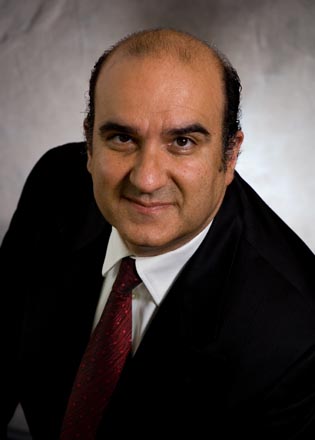
Shared Leadership for Community Change: Andre Leroux
As Executive Director of the Massachusetts Smart Growth Alliance, André has led efforts to reform zoning laws, increase transportation investment, and create a network of great places. He established Great Neighborhoods to support local groups and helped launch Transportation for Massachusetts to advocate for walking, biking, and public transportation.
Before joining the Alliance, André led the Reviviendo Gateway Initiative (RGI) in Lawrence, Massachusetts, a model of public-private partnership for urban revitalization. Composed of residents, property owners, government officials, artists, nonprofit organizations, and businesspeople, RGI sparked more than $120 million of investment in the City of Lawrence in three years. André also led the creation of two smart growth zoning districts in the city, helped to found a cultural economic development initiative, and coordinated a research and educational collaboration with the Massachusetts Institute of Technology called MIT@Lawrence.
How education lost its role as the great equalizer – Reuters Investigates
Get a good education, get a good job. That’s the promise. But it no longer works that way. Two students in Massachusetts, one in Gardner, one in Weston, show how the growing income gap is affecting the nation’s school systems.
Human nature in 2013
What is cutting-edge research likely to reveal about our human nature in 2013? Steven Pinker, professor at Harvard University, gives his predictions in an interview with The Economist‘s Lane Greene at The Economist’s World in 2013 Festival on December 8th 2012.
Innovate by Looking for Problem Patterns
Clayton Christensen, Harvard Business School Professor, explains how to approach innovation creatively by studying the problem you are trying to solve and how it was resolved by other industries.
Nancy Etcoff on the surprising science of happiness
Cognitive researcher Nancy Etcoff looks at happiness — the ways we try to achieve and increase it, the way it’s untethered to our real circumstances, and its surprising effect on our bodies.
Nancy Etcoff is part of a new vanguard of cognitive researchers asking: What makes us happy? Why do we like beautiful things? And how on earth did we evolve that way?
Why you should listen to her:
In her book Survival of the Prettiest, Nancy Etcoff refutes the social origins of beauty, in favor of far more prosaic and evolutionary explanations. Looking for a partner with clear skin? You’re actually checking for parasites. And let’s just say there’s a reason high heels are always in fashion.
Her recent research into the question of happiness exposes results that not only are surprising but reinforce things we should’ve known all along: like the fact that having flowers in the house really does make us happier. As the instructor of “The Science of Happiness” at Harvard Medical School and the director of the Program in Aesthetics and Well Being at Massachusetts General Hospital, Nancy Etcoff is uniquely qualified to solve the mysteries of contentment.
“Skewering the popular wisdom that beauty is a social construct, this Harvard psychologist argues that we ogle such features because they radiate the health and fertility our species needs to survive.” Time
In this provocative, witty, and thoroughly researched inquiry into what we find beautiful and why, Nancy Etcoff skewers one of our culture’s most enduring myths, that the pursuit of beauty is a learned behavior. Etcoff, a faculty member at Harvard Medical School and a practicing psychologist at Massachusetts General Hospital, skewers the enduring myth that the pursuit of beauty is a learned behavior.
Etcoff puts forth that beauty is neither a cultural construction, an invention of the fashion industry, nor a backlash against feminism, but instead is in our biology. It’s an essential and ineradicable part of human nature that is revered and ferociously pursued in nearly every civilizatoin–and for good reason. Those features to which we are most attracted are often signals of fertility and fecundity. When seen in the context of a Darwinian struggle for survival, our sometimes extreme attempts to attain beauty–both to become beautiful ourselves and to acquire an attractive partner–become understandable. Moreover, if we come to understand how the desire for beauty is innate, then we can begin to work in our interests, and not soley for the interests of our genetic tendencies.
Related articles
- Dan Gilbert: The surprising science of happiness (lugenfamilyoffice.com)